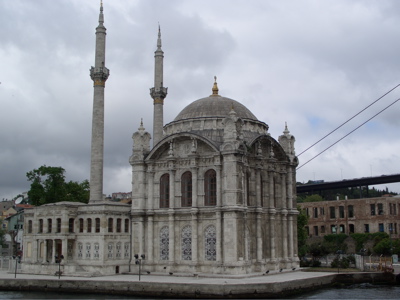
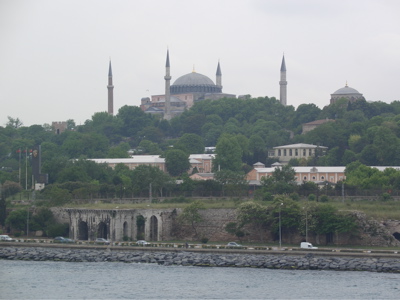
Some mosques in Istanbul, the one on the left is near the bridge that links Europe with Asia, the one on the right is one our way out of Istanbul.
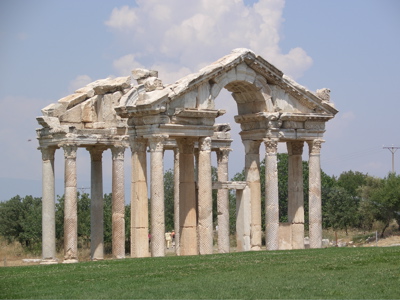
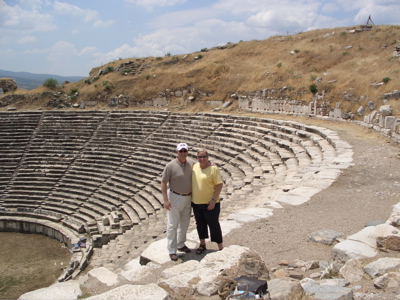
Our first stop was Kusadesi, on the Turkish coast. While many went to see the Roman Ruins of Ephaesus, Kevin and I went to see the Greek ruins of Aphrodite, about 2 hours inland. As you can see they are quite beautiful.
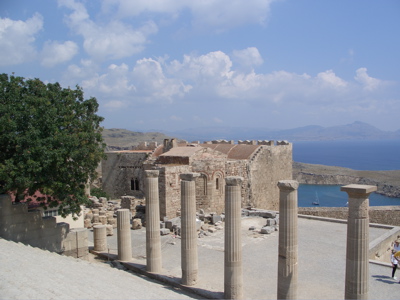
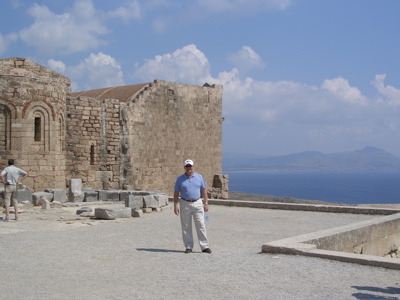
Next stop was the island of Rhodes where we went to see the ruins at Lindos, dating to the 4th century BC.
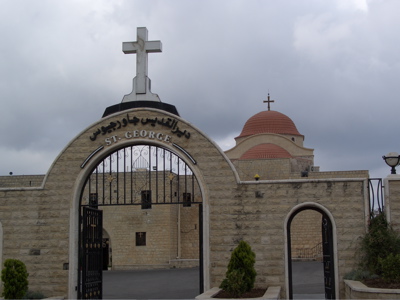
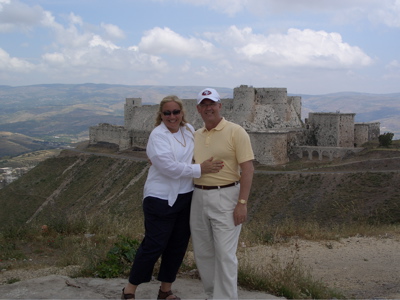
Bet you didn't expect to see a working Christain monestary in Syria...well here it is. The picture on the right is of the Krak des Chevaliers, the Castle of the Knights, a crusader castle built In the 1100's and could garrison at least 2,000 men...and their horses!
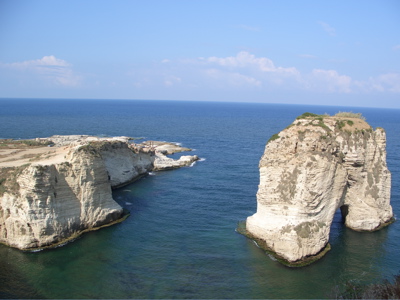
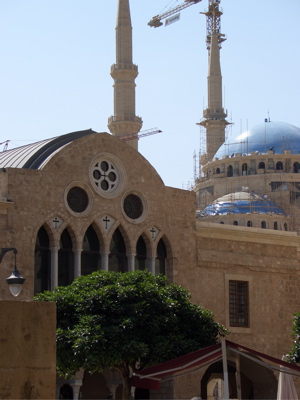
After Syria, it was onto Beirut, Lebanon. The picture on the left is the coast of Beirut, the one on the right is a Christain church right next to a mosque. The city is undergoing massive reconstruction to bring it back to where it was before the war.
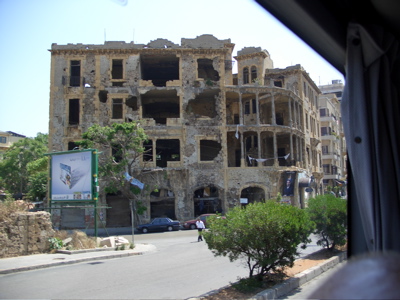
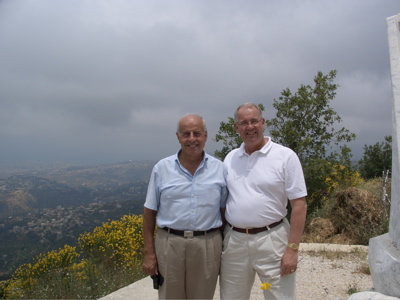
Just one of the many buildings that has yet to be restored. We were very lucky, one of Kevin's colleagues at Wells father-in-law lives in Lebanon and he met us and took us for a tour of the countryside and lunch at his home where we got to sample some fabulous Lebanese fare.
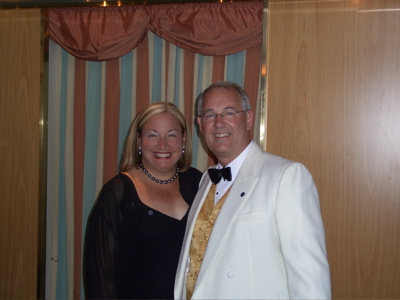
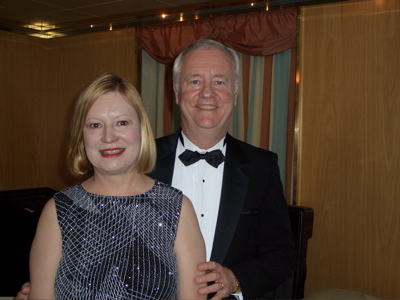
Dress up night on the ship! As many of you must have noticed, somehow Susan has become a blond, and has let her hair grow. Picture on the right is our American friends, Virginia and Randy.
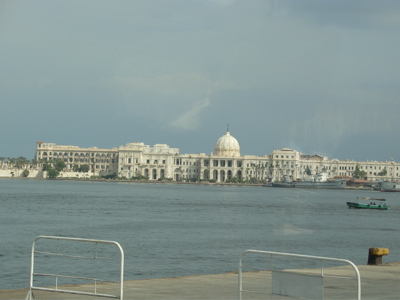
After a day at sea, we stopped at Alexandria, Egypt. The rst of our group went to Cairo to see the pyramids ( an all day trip), so we stayed behind to see Alexandria....I think we should have gone with the rest of them. There wasn't much to see, hense just one photo.
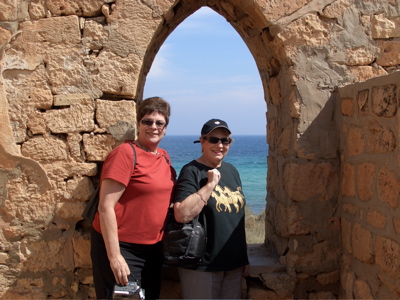
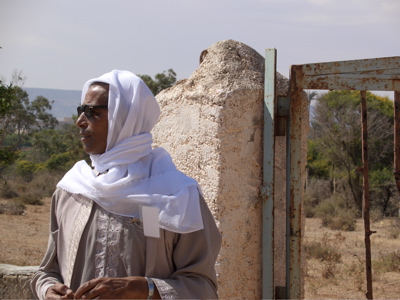
Our first stop in Libya ws Benghazi where we went to the ancient ruins of Tocra. Tocra was founded by Greek settlers around 500BC. As you can see from the picture it is along the coast. The picture on the left is Lyn and Helen, and on the right our guide.
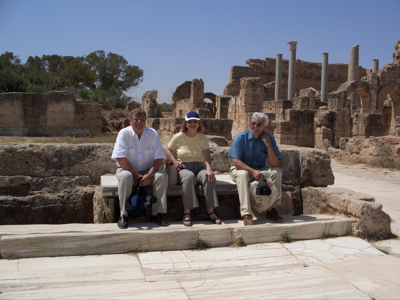
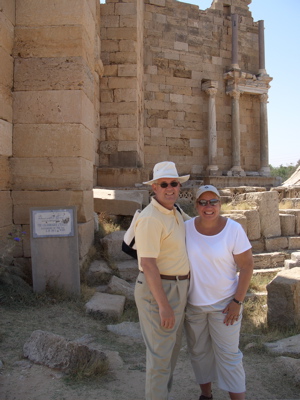
Our second stop in Libya was Tripoli. We went to see the ancient Roman city of Leptis Magna...it was amazing! While the site began as a Phoenician trading port around 1000 BC, it was its association with the Roman Empire for more than 600 years that brought Leptis Magna glory and prosperity. During that time, many buildings were constructed using Roman architectural styles, with no cost spared. Under Septimus Severus, Leptis Magna, the emperor’s birthplace, became one of the most beautiful cities in the Roman Empire.After centuries of preservation beneath the desert sands, major excavations during the Italian occupation cleared away tons of sediment and brought to light relics that defied imagination.
We took so many pictures because it truly is a huge city with market stalls, city gates, temples, baths...I could go on and on, but I won't. On the left we have a few people having a rest on can you guess what? Ancient public toilets! I think you recognize the couple on the right.
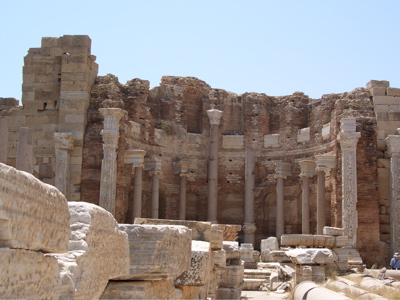
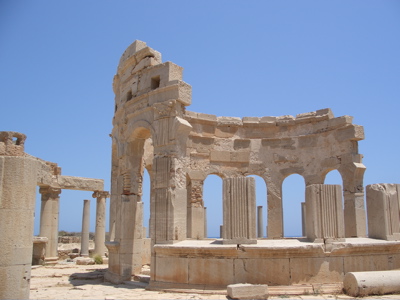
On the left is a part of the huge amphtheatre, on the right the market stalls.
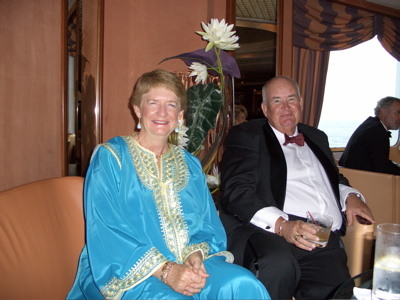
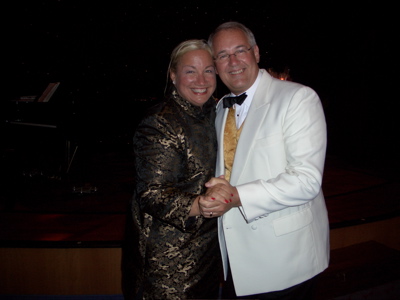
Another dress up night on the ship...on the left Grace and Graham, and on the right us.